Gallery
Showing posts with label Trans Am Cars. Show all posts

Trans Am Cars Third generation (1982–1992) Parts 8

Trans Am Cars Third generation (1982–1992) Parts 8


Trans Am Cars
Picture Of Trans Am Cars


Halfway thru 1987 the CHMSL 3rd brake light was moved down to the spoiler. In 1987, the "Firebird S/E" model was discontinued and the "Firebird Formula" made its return, marking an effort by Pontiac to revive its performance efforts, and was available with a choice of V8s (LG4, LB9 305 TPI, or L98 350 TPI), 16-inch convex wheels. It came standard with a non-functional version of the 1982–1984 Trans Am "Turbo Bulge" hood, base Firebird front and rear bumper covers, base fenders, and base tail light style. The wrap-around wing was updated and now standard on Trans Am and Formula; the regular, flat-surfaced spoiler from earlier Trans Am models was now made standard on Firebird. Trans Am and Formula were also offered with an optional 140 mph (230 km/h) speedometer. WS6 was standard equipment on the Formula and GTA.

Trans Am Cars Third generation (1982–1992) Part 7

Trans Am Cars Third generation (1982–1992) Part 7

Trans Am CarsPicture Of Trans Am Cars

In 1986, the Firebird received a new tail light design, featuring a smooth, rounded design with a large internal blackout grid and a matching center section featuring a Silver Firebird logo and "PONTIAC" script. Also new was a 3rd brake light mounted atop the rear hatch glass, (CHMSL), to comply with Federal legislation. Also in 1986, the 2.5L 4-cylinder engine was dropped and replaced by the multi-port fuel-injected 2.8L V6 as the standard engine. All Firebirds received an electric fan instead of the engine driven fan. Persistent overheating issues with the L69 caused GM to discontinue the engine early in the 1986 production run. The Trans Am Cars was also given a new tail light design, featuring a smaller internal blackout grid theme and utilized a different center section featuring a separate Firebird logo. The rubber/vinyl wrap-around rear spoiler now became standard on Trans Am Cars.

Trans Am CarsPicture Of Trans Am Cars

1987 saw Pontiac's release of the new luxury Trans Am Cars. the GTA, and was designated Regular Production Option "Y84", (a return of Pontiac's famed Special Edition Trans Am RPO, but no longer as just a Black and Gold paint scheme. The GTA was available in a wide array of colors and options, featuring special seats with adjustable lumbar supports, a digital dash, monochromatic paint, and special badges among other top of the line options.

Trans Am Cars Third generation (1982–1992) Part 6

Trans Am Cars Third generation (1982–1992) Part 6

Trans Am CarsPicture Of Trans Am Cars

For 1985, Firebird models underwent a significant facelift and a number of improvements were introduced. The standard Firebird received a restyled nose cone and rear bumper with wrap-around inserts, known as "bumperettes". The interior underwent a major redesign as well. The dash was changed to a more elegant rounded-edge look, losing the Torx head aircraft gauge theme. The gauges themselves now featured a grid pattern on their background and Red indicator needles lit-up. A new "Formula" steering wheel, introduced only on the 1984 15 Anniversary Trans Am Cars, was now optional on all Firebirds. A new, ergonomic center console was also introduced, featuring a soft rubberized surface, and offered much more support for the driver's right arm. The grid pattern theme was extended onto the radio/HVAC faceplate and console plate. With the loss of the Recaro T/A, Cloth Recaro seats were now made optional on all Firebirds. The carbureted 2.8L V6 was replaced with a new, multi-port fuel-injected 2.8L V6 making 135 hp (101 kW). The S/E lost its "S/E" script on the sail panels, replaced with color-coded Firebird logo medallions, similar to the version used on the 1983/'84 Recaro T/A. "Firebird S/E" decals were added to the front lower portion of the doors as well and a new flat hood, similar to the new Trans Am hood, featured only a pair of twin vents on the leading edge of the hood. For the Trans Am Cars, a new fuel-injected V8 appeared, the LB9 Tuned Port Injection (TPI) Chevy 305ci, producing 210 hp (160 kW). It garnered suitable attention from buyers, but was unavailable with the T-5 manual transmission, leaving the LG4 305ci and the L69 H.O. 5.OL 305ci as the only V8's available with the T-5. The Trans Am "Turbo Bulge" hood was discontinued and a new flat hood with twin louvered vents at the leading edge of the hood and extractor vents on the left and right sides of the rear of the hood. Trans Am Cars received a restyled nose with optional integral fog lights, a new rear bumper, smaller air extractors on the fenders, redesigned "W62" ground effects package, and an optional Black rubber wrap-around styled rear spoiler that increased rear downforce pressure. Also, the large "Screaming Chicken" hood bird decal option returned on the Trans Am's option list and reflected the new 3rd Gen design.

Trans Am Cars Third generation (1982–1992) Part 6

Trans Am Cars Third generation (1982–1992) Part 6

Trans Am CarsPicture Of Trans Am Cars

In 1983, a few interior changes were made and some options were deleted, most notably the Aluminum Trans Am hood. The Trans Am Cars was again selected as the 1983 Daytona 500 Pace Car, but this time Pontiac took full advantage of the occasion and offered a total of 2500, Special Edition Daytona Pace Car replicas through their dealerships. The limited-edition cars featured a new aerodynamic "RPO W62" full body ground effects package that extended around the entire car with filler panels in place of the nose grilles, further reducing the Trans Am's drag co-efficient. The "RPO Y84" Recaro T/A was no longer a Limited Edition, but now became an option on the Trans Am Cars. It's interior now featured a Tan Leather Recaro seats and a Tan interior. Also for 1983, two new transmissions were released. the TH-700R4 4 speed automatic with an overdrive gear and the T-5 Borg-Warner 5 speed manual, which employed a 5th gear overdrive, both maximizing fuel economy with overdrive through reduced RPMs on the highway. About halfway through 1983, the "H.O. 5.0L", (RPO L69), a 9:5:1 compression, "CCC" controlled Chevy 305ci engine was released, with 190 bhp/240 lb.ft.of torque and was given its own version of the cold air induction system. Savvy buyers who ordered the L69 with the manual T-5 transmission got the bonus of standard 3.73:1 ratio axle gears.

Trans Am CarsPicture Of Trans Am Cars

In 1984, the Firebird achieved its all time highest sales figures for the 3rd Generation design. The Trans Am became available with the same "RPO W62" ground effects package, used on the 1983 Daytona Pace Car replica, and new 20-slot, 15-inch "High-Tech" aluminum wheels were also available. The problematic Crossfire 305ci was discontinued. A new TH-700R4 automatic transmission featuring an overdrive gear became the only automatic transmission available. The T-5 Borg-Warner transmission now featured a hydraulic clutch system. The Recaro T/A was revised, losing its Gold painted lower areas for Black painted "RPO W62" ground effects and special Gold Pinstripes, similar to the pinstripes used on the 2nd Gen "Y84" Trans Am S/E. It was the last year of both Pontiac's Black and Gold RPO Y84 Trans Am and the Recaro T/A. Also for 1984, Pontiac celebrated the 15th Anniversary of the Trans Am by releasing a spectacular, White and Blue, limited-edition Trans Am. Only 1500 were built, 1000 automatics and 500 manual, and featured a list of special items.

Trans Am Cars Third generation (1982–1992) Part 5

Trans Am Cars Third generation (1982–1992) Part 5

Trans Am CarsPicture Of Trans Am Cars

To lure in new buyers, Pontiac offered a lengthy list of interior amenities, such as the Viscount "PMD" seats, locking rear floor panel, cloth covered interior panels, power windows/ mirrors/ locks/ rear hatch, a leather interior package. seats/ steering wheel rim/ shift knob (auto or manual)/ parking brake handle, etc. Several engines were available. the standard economy minded fuel-injected 90 hp 2.5L 4 cylinder Pontiac "Iron Duke" (marking the 1st time a 4-cylinder engine was offered in a Firebird, and in a sad twist of fate, the last "True" Pontiac designed engine offered); a 102 hp 2.8L V6; and two Chevy 5.0L V8s, (305ci). The first and most common was the LG4 305ci, utilizing GM's "Computer Command Control", an electronically assisted carburetor/distributor system, it produced 145 hp (108 kW). The other was the new LU5 "Crossfire" fuel-injected 305, which employed an electronically controlled, twin throttle-body fuel injection system, similar to that used in the 1982 Corvette's 5.7L, and produced 165 hp (123 kW). Available transmissions were the TH-200C 3 speed automatic on 4, 6, & some LG4 V8 cars, the venerable TH-350 automatic was used on most V-8's, and the very sturdy Borg-Warner 4 speed was the only manually shifted transmission available. The base Firebird came standard with 14-inch (360 mm) steel wheels, optional 14-inch aluminum rims, and 15-inch (380 mm) aluminum wheels were available on the S/E and Trans Am Cars models. RPO WS6 retuned for 1982, available on both the S/E and Trans Am Cars, it included 4-wheel disc brakes, P215/65R15 Goodyear Eagle GT radials with 15-inch (380 mm) cast aluminum wheels, stiffer springs, a 34mm front and 23mm rear sway bars, a fast ratio 12.7:1 Saginaw steering box, and RPO G80 limited slip GM "Corporate" 7.5 inch 10 bolt rear differential. Also optional was the WS7 option, which was the same as the WS6, but used rear drum brakes instead of the 4-wheel disc brakes. This option was created due to a shortage components for the rear disc set-up.

Trans Am Cars Third generation (1982–1992) Part 4

Trans Am Cars Third generation (1982–1992) Part 4

Trans Am CarsPicture Of Trans Am Cars

Despite this, the bulged "Turbo Hood" remained, and was optional on the Trans Am Cars. On Trans Am's with the "Crossfire" throttle body injected 305ci, the hood was made functional with a special cold air induction system. For the first part of 1982, a special Aluminum version of this hood was also available as an extra cost option on the Trans Am Cars. The now infamous Black and Gold "Trans Am S/E", aka "RPO Y84" continued on into its new form as the limited edition "Recaro T/A", featuring Dark Gray Parella cloth covered Recaro seats, and a list of special features. The new Trans Am Cars was also selected to pace the 1982 Daytona 500, a Bright Red version was chosen and a Daytona 500 Pace Car Edition was sold through Pontiac dealers in very limited numbers.

Trans Am Cars Third generation (1982–1992) Part 3

Trans Am Cars Third generation (1982–1992) Part 3

Trans Am CarsPicture Of Trans Am Cars

The 1982 Firebirds were released with 3 models Firebird, Firebird S/E, & Firebird Trans Am Cars and the Firebird Formula was retired. In an effort to trim production costs, the new Firebird had more in common with the Camaro than ever before. The cars now shared over 60% of their parts with each other. The "Firebird" was still the base model and equivalent to its sibling, the Chevy "Camaro Sport Coupe". Newly introduced for 1982 was the "Firebird S/E", a mid-level luxury version, which could be loaded with almost as many options as the Trans Am, including "RPO WS6", Pontiac's performance suspension. Last but not least was the "Trans Am", Pontiac's performance-level Firebird. Pontiac had hoped to drop all the "Trans Am" badges from the new cars and save the $5 per Trans Am royalty paid to the SCCA for use of the name. Early promotional cars were even marked "T/A" as an alternative, however it was decided that it would be more trouble than it was worth and the "Trans Am" moniker remained. The Trans Am Cars also received an optional "Turbo Bulge" hood, styled loosely after the earlier 1980/'81 Turbo Trans Am. In fact, plans had originally been made to use a further refined version of Pontiac's Turbo 4.9L engine, but it was scrapped at the last minute.

Trans Am Cars Third generation (1982–1992) Part 2

Trans Am Cars Third generation (1982–1992) Part 2

Trans Am CarsPicture Of Trans Am Cars

The Firebird and Camaro had been completely redesigned, with the windshield slope set at 60 degrees, (about 3 degrees steeper than anything GM had ever tried before), and for the first time, a large, glass-dominated hatchback that required no metal structure to support it. Two pop-up headlights, a first on the F-Body cars, are the primary characteristic that distinguishes the 3rd Gen Firebird from its both its Camaro sibling and its prior form (a styling characteristic carried into the 4th Gen's design). In addition to being about 500 lbs (227 kg) lighter than the previous 2nd Gen design, the 3rd Generation Firebird was the most aerodynamic product GM had ever released. Wind tunnels were used to form the new F-Body platform's shape, and Pontiac took full advantage of it. The aerodynamic developments extended to the finned aluminum wheels with smooth "Bowling Ball" caps & a spoiler that was functional.

Trans Am Cars Third generation (1982–1992) Part 1

Trans Am Cars Third generation (1982–1992) Part 1

Trans Am CarsPicture Of Trans Am Cars

Because of the climate in the US with regard to the availability and cost of gasoline (both fuel crises had occurred by this time), the weight and the fuel consumption of the 3rd generation had to be considered in the design. In f-body development, both the third generation Firebird and Camaro were proposed as possible front wheel drive platforms, but the idea was scrapped. The state of the art of computerized engine management was in its infancy, and as long as saving fuel was the primary objective, it was not possible to have high horsepower and torque numbers. They did manage to cut enough weight from the design so that acceleration performance would be significantly better than the 1981 models. They also succeeded brilliantly in the fuel consumption department, offering a Firebird that would provide 34 miles per gallon. GM executives decided that engineering effort would best be spent on aerodynamics and chassis development. They created a modern platform, so that when engine technology advanced, they would have a well balanced package with acceleration, braking, handling, and aerodynamics. For the time being, they would have world class aerodynamics and handling, and excellent fuel economy. (Little did they know that by 1989 the fastest American car on the market would be a Firebird.)

Trans Am Cars Second generation (1970–1981) End Part

Trans Am Cars Second generation (1970–1981)

Trans Am Cars Picture Of Trans Am Cars

Beginning in 1978, Pontiac engineers reversed years of declining power by raising the compression ratio in the Pontiac 400 through the installation of different cylinder heads with smaller combustion chambers (1977 pontiac 400 engines also had the 350 heads bolted to the 400 blocks, these heads were known as the 6x-4 heads)(taken from the Pontiac 350). This increased power by 10% for a total of 220 during the 1978-79 model years. The 400/403 options remained available until 1979, when the 400 CID engines were only available in the 4-speed transmission Trans Ams and Formulas (the engines had actually been stockpiled from 1978, when PMD had cut production of the engine). 1979 marked the 10th Anniversary of the Trans Am, and a special anniversary package was made available: silver paint with a silver leather interior. The 10th Anniversary cars also featured a special Firebird hood decal, which extended off of the hood and onto the front fenders. In 1979 Pontiac sold 116,535 Trans Ams which still holds the record to this day. In 1980, due to ever-increasing emissions restrictions, Pontiac dropped all of its large displacement engines.


Trans Am-Cars Picture Of Trans Am Cars

1980 therefore saw the biggest engine changes for the Trans Am. The 301, offered in 1979 as a credit option, was now the standard engine. Options included a turbocharged 301 or the Chevrolet 305 small block.


Trans-Am Cars Picture Of Trans Am Cars

In the final year of the Second Generation Firebirds (1981), Trans Am still used the same engines as it had in the previous model year, with the only change being the addition of a new electronic carburetion system.

Trans Am Cars Second generation (1970–1981) Part 3

Trans Am Cars Second generation (1970–1981)

Trans Am Cars

The 1974 models featured a redesigned "shovel-nose" front end and new wide "slotted" taillights. In 1974, Pontiac offered two base engines for the Firebird: a 100 hp (75 kW) 250 cu in (4.1 L) inline-6 and a 155 hp (116 kW) 350 cu in (5.7 L) V8. Available were 175 hp (130 kW) to 225 hp (168 kW) 400 cu in (6.6 L) V8 engines, as well as the 455 cu in (7.5 L) produced 215 hp (160 kW) or 250 hp (190 kW), while the SD-455 produced 290 hp (220 kW). The 400, 455, and SD-455 engines were offered in the Trans Am and Formula models during 1974

Trans Am Cars

The 1975 models featured a new wraparound rear window with a revised roofline. The Super Duty engines, Muncie 4-speed, and TurboHydramatic were no longer available in 1975. The 400 and 455 engines were optional above the base six and V8 in the 1975 and 1976 models.

Trans Am Cars

In 1976, Pontiac celebrated their 50th Anniversary, and a special edition of the Trans Am was released. Painted in black with gold accents, this was the first anniversary Trans Am package and the first production Black and Gold special edition. In 1977, Pontiac offered the T/A 6.6 Litre 400 (RPO W72) rated at 200 hp (150 kW), as opposed to the regular 6.6 Litre 400 (RPO L78) rated at 180 hp (130 kW). In addition, California and high altitude cars received the Olds 403 engine, which offered a slightly higher compression ratio and a more usable torque band than the Pontiac engines of 1977.

Trans Am Cars Second generation (1970–1981) Part 2

Trans Am Cars Second generation (1970–1981)

Trans Am CarsPicture Of Trans Am Cars

A distinctive, slant-nose facelift occurred in 1977, redone somewhat in 1979. From 1977 to 1981, the Firebird used four square headlamps, while the Camaro continued to retain the two round headlights that had previously been shared by both Second Generation designs. Curb weights rose dramatically in the 1973 model year due to the implementation of 5 mph (8.0 km/h) telescoping bumpers and various other crash and safety related structural enhancements; SD455 Trans Ams Cars weighed in at 3,850 lb (1,750 kg).


Trans Am-CarsPicture Of Trans Am Cars

The 455 engine available in the second generation Firebird Trans Ams was arguably the last high-performance engine of the original muscle car generation. The 455 cu in (7.5 L) engine first made its appearance in 1971 as the 455-HO. In 1973 and 1974, a special version of the 455, called the SD-455, was offered. The SD-455 consisted of a strengthened cylinder block that included 4-bolt main bearings and added material in various locations for improved strength. Original plans called for a forged crankshaft, although actual production SD455s received nodular iron crankshafts with minor enhancements. Forged rods and forged aluminum pistons were specified, as were unique high flow cylinder heads. A 1967 GTO Ram Air camshaft with 301/313 degrees of advertised duration, 0.407 inch net valve lift, and 76 degrees of valve overlap was specified for actual production engines in lieu of the significantly more aggressive Ram Air IV style cam that had originally been planned for the engine (initially rated at 310 hp (230 kW) with that cam), but proved incapable of meeting the tightening emissions standards of the era. This cam, combined with a low compression ratio of 8.4 (advertised) and 7.9:1 actual resulted in 290 SAE net horsepower. Production test cars yielded 1/4 mile times in the 14.5 second/98 MPH range in showroom tune - results consistent for a car with a curb weight of 3,850 pounds and the rated 290 SAE net horsepower figure some sources suggest was "under-rated," High Performance Pontiac magazine dyno-tested an SD and gave it 371 SAE net rating. During a 1972 strike, the Firebird (and the sister F-body Camaro) were nearly dropped. Pontiac offered the 455 for a few more years, but tightening restrictions on vehicle emissions guaranteed its demise. Thus, the 1976 Trans Am was the last of the "Big Cube Birds," with only 7,100 units produced with the 455 engine.


Trans Am Cars Second generation (1970–1981) Part 1

Trans Am Cars Second generation (1970–1981)

Trans Am CarsPicture Of Trans Am Cars

The second generation debut for the 1970 model year was delayed until February 26, 1970, because of tooling and engineering problems; thus, its popular designation as a 1970 1/2 model, while leftover 1969s were listed in early Pontiac literature without a model-year identification.

Trans-Am CarsPicture Of Trans Am Cars

Replacing the "Coke bottle" styling was a more "swoopy" body style, with the top of the rear window line going almost straight down to the lip of the trunk lid — a look that was to epitomize F-body styling for the longest period during the Firebird's lifetime. The new design was initially characterized with a large C-pillar, until 1975 when the rear window was enlarged.

Trans Am-CarsPicture Of Trans Am Cars

There were two Ram Air 400 cu in (6.6 L) engines for 1970: the 335 hp (250 kW) Ram Air III (366 hp (273 kW) in GTO) and the 345 hp (257 kW) Ram Air IV (370 hp (280 kW) in GTO) that were carried over from 1969. The difference between the GTO and Firebird engines was the secondary carburetor linkage which prevented the rear barrels from opening. Bending the linkage to allow full carburator operation resulted in identical engines.

Trans Am Cars First generation (1967–1969)
Trans Am Cars First generation (1967–1969)

Trans Am CarsPicture Of Trans Am Cars

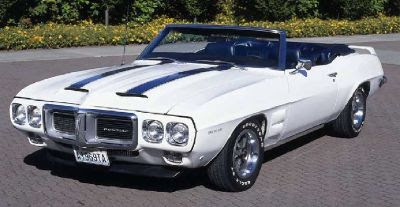
The first-generation Firebirds had a characteristic "coke-bottle" styling. Unlike the Camaro, its bumpers were integrated into the design of the front end and its rear "slit" taillights were inspired by the Pontiac GTO. Both a two-door hardtop and a convertible were offered through the 1970 model year (the next generation, dropping the convertible, being announced as 1970 1/2 models).

The base model had a 230 in³ (3.8 L) OHC six-cylinder, single-barrel carburetor motor developing 165 hp (123 kW). The next model, the Sprint, had a four-barrel carburetor, developing 215 hp (160 kW). Most buyers opted for the V8s: the 326 in³ (5.3 L) two-barrel 250 hp (186 kW, the 'H.O.' (High Output) engine of the same size but with a four-barrel carburetor 285 hp (213 kW), or the 400 in³ (6.6 L) from the GTO 325 hp (242 kW). A Ram Air option was available, with functional hood scoops, higher flow heads with stronger valve springs and a different camshaft. Power for the Ram/Air package was the same as the conventional 400HO, but peaked at a higher RPM. The 230 in³ (3.8 L) engines were replaced by 250 in³ (4.1 L) ones, developing 175 hp (130 kW) single barrel, and 215 hp (160 kW) four-barrel. Also, for 1968, the 326 in³ (5.3 L) motor was replaced by a 350 in³ (5.7 L). An H.O. version of the 400 in³ (6.6 L) was offered from 1968, with a revised cam, and developed 330 hp (246 kW), while power output on the other engines increased marginally. In 1969, a $725 optional handling package called the Trans Am Performance and Appearance Package which had rear spoiler was introduced, named after the Trans-Am Series. As the name was used without permission, the SCCA threatened to sue, but GM settled the deal by paying $5 to the SCCA for every car sold. Of these first Trans Ams Cars, 689 hardtops and eight convertibles were made. There was an additional Ram Air IV engine option for the 400 in³ that year to complement the Ram Air II; these generated 345 and 335 hp respectively. Bodywise, the only difference from the 1967 to the 1968 model was the addition of federally-mandated side marker lights. For the front of the car, the blinkers were made larger and moved to wrap around the front edges of the car, and, for the rear, the Pontiac (V-shaped) Arrowhead logo was added to each side.


Trans-Am CarsPicture Of Trans Am Cars

The 1969 model received a major facelift with a new front end design made of an Endura bumper housing the headlights and grilles. Inside, there was a revised instrument panel and steering wheel. Also, the ignition switch was moved from the dashboard to the steering column with the introduction of GM's new locking ignition switch/steering wheel.

Trans Am-CarsPicture Of Trans Am Cars

Due to engineering problems that would ultimately delay introduction of the all-new 1970 Firebird past the usual fall debut, Pontiac continued production of 1969-model Firebirds into the early months of the 1970 model year (the other 1970 Pontiacs were introduced Sept. 18, 1969) until the end of calendar year 1969. By late spring 1969, Pontiac deleted all model year references on Firebird literature and promotional materials anticipating the extended production run of the then-current 1969 models.
Trans-Am-CarsPicture Of Trans Am Cars

The first-generation Firebird could easily be told from the Camaro with its four round headlamps, while the Camaro got only two.


The History Of The Trans Am Cars

The History Of The Trans Am Cars

Trans Am CarsPicture Of Trans Am Cars

The Pontiac Firebird was a pony car built by the Pontiac Motor Division of General Motors and was manufactured from 1967 until 2002.

Trans-Am CarsPicture Of Trans Am Cars 1970

The Firebird was introduced in the same year as the Mercury Cougar, which also shared a platform with another well-known pony car, the Ford Mustang.

Trans Am-CarsPicture Of Trans Am Cars

The vehicles were, for the most part, powered by various V8 motors of different GM divisions. While primarily Pontiac-powered until 1982, Firebirds were built with several different engines from nearly every GM division.

Trans-Am-CarsPicture Of Trans Am Cars

All Firebirds have always included solid rear axles, also referred to as live axles. Pontiac switched to a coil spring/torque arm rear suspension design in 1982.